
The Real Math Behind Slot RTPs (And Why It Isn't Rigged)

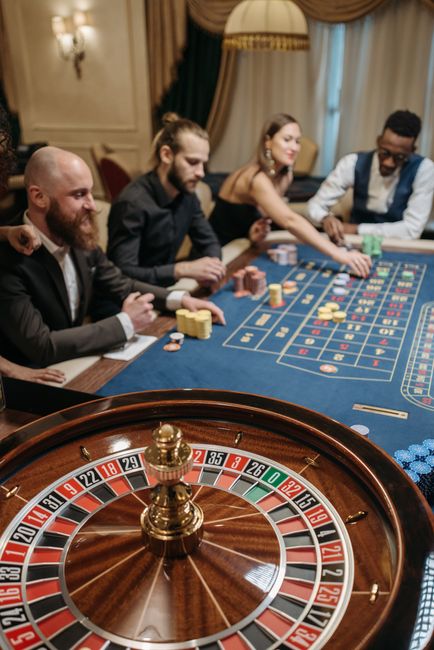
Ask ten gamblers why they lost last weekend and you'll hear the same three words: the game's rigged. It's the oldest complaint in the book, and it's almost always wrong. The uncomfortable truth is that slot machines, roulette wheels, and blackjack tables don't need to cheat you. The math already guarantees the house a cut over time, and it does so with a precision that would impress an actuary. Understanding how that math actually works won't turn you into a winner, but it will stop you from blaming phantom conspiracies and help you make sharper decisions with your bankroll.
RTP, House Edge, and the Number Everyone Misreads
Return to Player, or RTP, is the percentage of all money wagered on a game that gets paid back to players over millions of spins. A slot with a 96% RTP returns 96 cents for every dollar cycled through it, on average, over an enormous sample size. That remaining 4% is the house edge, and it's the casino's revenue model in a nutshell.
Here's where people go wrong. RTP is not a session guarantee. If you sit down with $100 and spin 500 times at $1 per spin, you've wagered $500. A 96% RTP does not mean you'll walk away with $480. It means the theoretical loss across that $500 of action is about $20, and the actual result will swing wildly depending on variance. You could hit a 2,000x multiplier on spin 400 and book a massive profit. You could also bust out in twenty minutes without a single meaningful win. RTP describes the long run; your session is a single pixel in that picture.
Different games carry wildly different edges, which matters more than most players realize:
- Blackjack with basic strategy: roughly 0.5% house edge, making it one of the best bets in the building.
- Baccarat banker bet: about 1.06% after commission.
- European roulette: 2.7%, thanks to that single zero. American roulette doubles it to 5.26% with the extra 00.
- Slot machines: typically 2% to 10%, with the tightest machines often sitting in high-traffic tourist spots.
- Keno and side bets: frequently 15% to 35%. This is where casinos make their real money.
That gap between 0.5% and 35% is the single most important number in gambling. Players obsess over which slot is "hot" while ignoring the fact that the game they choose determines their fate far more than any streak ever will.
Volatility: The Hidden Variable Nobody Talks About
Two slots can both advertise 96% RTP and play like completely different animals. Volatility, sometimes called variance, describes how the payouts are distributed. For a closer look, สล็อตเว็บตรง has helpful details.
Low-volatility games pay small amounts frequently. You'll grind along, bleeding slowly, with a decent chance of a long session. High-volatility slots pay rarely but can produce enormous multipliers when they do. Book of Dead and its clones are famous examples: you can spin 300 times with nothing, then land a single bonus round that pays 500x your bet.
Neither is better. They suit different bankrolls. If you have $50 and want two hours of entertainment, a high-volatility slot will likely eat you alive in fifteen minutes. If you have $500 and want a shot at a genuinely life-changing hit, low volatility is a slow death by a thousand paper cuts.
Practical tip: check the game's help screen or the casino's game info tab. Reputable providers publish RTP and often indicate volatility. If a casino hides that information, treat it as a red flag.
Why Skill Games Still Lose for Most Players
Poker is the one game in the casino where the house takes a fixed rake and steps out of the way. That means the money flows from weaker players to stronger ones. The casino doesn't beat you; other players do.
This is why poker feels so different. A good player can genuinely win over thousands of hands because the edge comes from exploiting opponents, not fighting the math. But the rake is brutal at low stakes. A 5% rake capped at $5 per pot sounds trivial until you realize it's siphoning money out of every significant hand. At micro-stakes, the rake can effectively be the toughest opponent at the table.
The brutal arithmetic is this: roughly 10% to 20% of poker players are long-term winners. Everyone else funds the ecosystem. If you're not studying ranges, reviewing hand histories, and tracking your results, you're almost certainly the person being exploited, not the one doing the exploiting.
Betting markets work similarly. A sharp bettor finds value where the bookmaker's odds are wrong. A recreational bettor bets with their heart and pays the vig on every single wager. Accumulators, in particular, are a bookmaker's dream because the margin compounds with each leg.
Myths That Refuse to Die
The gambling world is stuffed with folklore that costs people real money.
- "The machine is due." Slots use random number generators with no memory. A machine that hasn't paid in six hours is exactly as likely to pay on the next spin as one that just paid.
- "Some slots are hot right now." Unless you have inside access to the RNG's seed (you don't), you have no idea. "Hot" and "cold" are stories we tell to make randomness feel manageable.
- "I'm on a heater, so I should raise my bets." If the game is negative expectation, betting more when you feel lucky simply accelerates the bleed.
- "Casinos can tighten machines remotely mid-play." In regulated jurisdictions, RTP is certified and locked. Changing it requires regulatory re-filing. What they can do is choose which slots to place on the floor, and that's a business decision you should pay attention to.
A Smarter Way to Think About Your Bankroll
None of this means you shouldn't play. It means you should play with clear eyes. Decide in advance what the money is for. If it's entertainment, treat it like a night at a concert: the ticket is gone the moment you walk in, and the value was the experience, not a refund at the door.
If you're playing with an edge—poker, matched betting, advantage play—then track every result honestly. Variance is patient and it will humble you for months before the math corrects. A 2% edge still produces losing weeks and losing months.
Set hard stop-losses. Never chase. Never bet money you need. And above all, stop pretending the game is rigged. The game is fair, transparent, and completely honest about your chances. The math isn't hiding anything. It's right there in the RTP, quietly waiting for time to do its work.

Joeby Ragpa
This template is so awesome. I didn’t expect so many features inside. E-commerce pages are very useful, you can launch your online store in few seconds. I will rate 5 stars.
ReplyAlexander Samokhin
This template is so awesome. I didn’t expect so many features inside. E-commerce pages are very useful, you can launch your online store in few seconds. I will rate 5 stars.
ReplyChris Root
This template is so awesome. I didn’t expect so many features inside. E-commerce pages are very useful, you can launch your online store in few seconds. I will rate 5 stars.
Reply